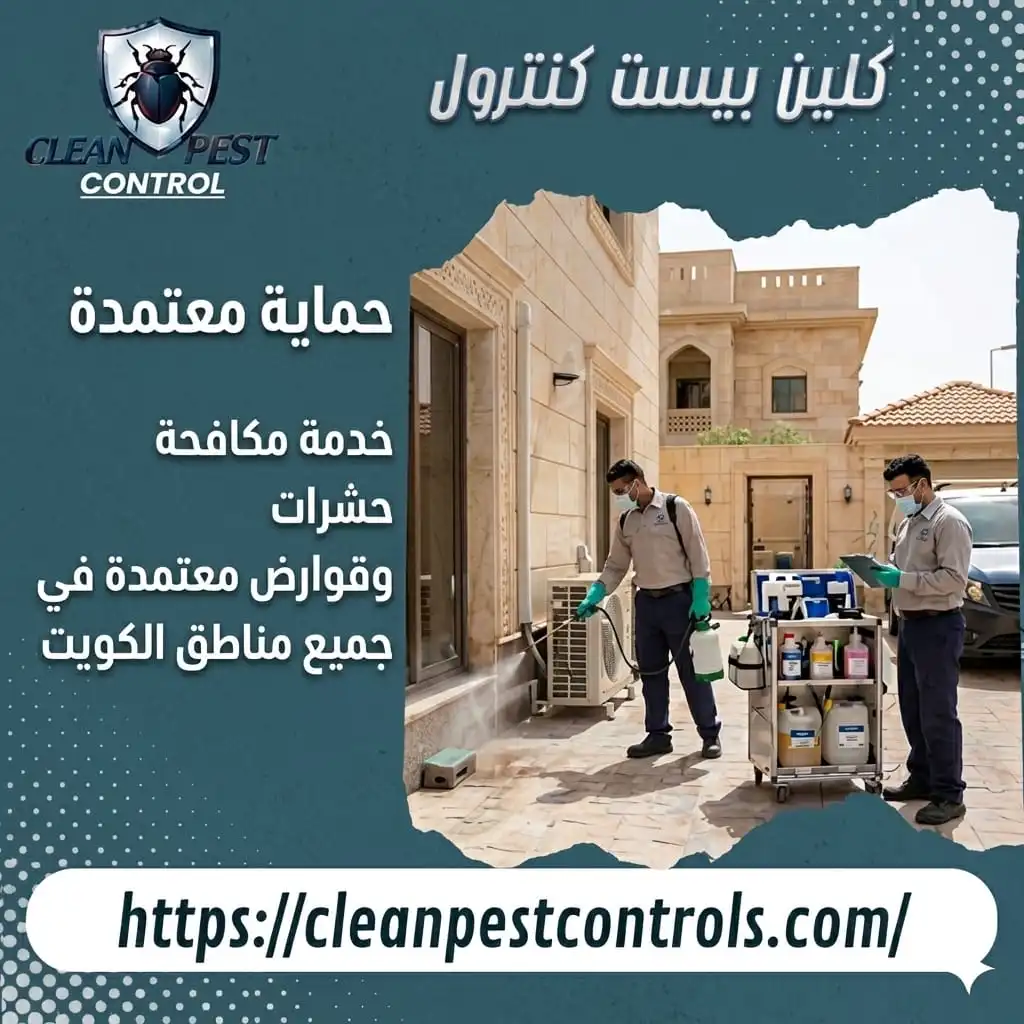
When homeowners notice insects inside their property, the first thing they often think about is spraying and getting rid of them as quickly as possible. However, what many people do not realize is that not all pests should be treated in the same way. A cockroach hiding inside cracks and emerging at night is completely different from a mosquito flying between rooms or a fly moving from one location to another in search of food. This is why pest control treatments sometimes fail even when strong products are used. The issue is often not the pesticide itself but choosing the wrong control strategy for the type of pest involved. In Kuwait, with its hot climate and varying environmental conditions, both crawling and flying pests are common throughout the year. Each type requires a specialized treatment plan to achieve effective results and reduce the likelihood of reinfestation.
Classification of Pests: Crawling, Flying and Transitional Types

The first step in any successful pest control program is understanding the type of pest being targeted. The world of household pests is extensive, but most species commonly encountered in Kuwait can be categorized into three primary groups: crawling insects, flying insects and species that transition between different movement stages during their life cycle.
Crawling pests primarily move across floors, walls and hidden voids. Flying pests, on the other hand, can travel through the air and move quickly between different environments. There are also species that begin life as ground-dwelling or inactive forms before eventually developing wings and becoming flying insects.
This classification is important because it influences every aspect of pest management, from inspection procedures to treatment selection. The places where cockroaches are found are not the same locations where mosquitoes or flies are typically encountered. Even the treatment materials and application methods may differ significantly based on the biology and behavior of the pest.
Key characteristics of these classifications include:
- Crawling pests depend on cracks, voids and hidden shelters near food sources
- Flying pests require different breeding and resting locations
- Some species completely change their movement patterns during development
- Monitoring and inspection methods vary by pest category
- Primary activity zones differ significantly
- Effective treatment depends on identifying the correct category before selecting a control strategy
For this reason, pest management professionals always identify the pest group first before choosing the most effective treatment approach.
Crawling Pests in Kuwait: Cockroaches, Ants and Rodents
Crawling pests are among the most common household problems in Kuwait because of their ability to hide effectively and adapt to their surroundings. Cockroaches, for example, can survive for long periods in locations most homeowners would never consider, including hidden voids behind kitchen cabinets, utility areas and drainage systems. Ants can establish large colonies within walls, gardens and beneath flooring systems while exposing only a small percentage of their population during food searches.
Although mice and rats are technically rodents rather than insects, they are frequently included within pest management programs because their behavior and habitat preferences often overlap with those of crawling pests. One of the primary challenges associated with this category is that infestations often remain hidden. In many situations, the more organized and established the infestation becomes, the less visible it appears to property occupants.
Common crawling pests found throughout Kuwait include:
- German cockroaches in kitchens and food preparation areas
- American cockroaches around drainage systems and utility rooms
- Black ants inside homes and residential properties
- Red ants in gardens and outdoor environments
- Termites within wooden structures and building components
- Mice and rats in storage areas, ceilings and utility spaces
Because of their hidden nature, successful control requires targeting the colony, nest or primary harborage area rather than simply eliminating the visible pests.
Flying Pests: Mosquitoes, Flies, Wasps and Hornets

Flying pests differ significantly from crawling pests because they are highly mobile and capable of moving between locations with ease. As a result, many people feel that flying pests appear suddenly and in large numbers even though the actual source of the infestation may be relatively localized.
Mosquitoes are among the most common flying pests during Kuwait’s warmer months due to the presence of standing water and favorable environmental conditions. Flies are often associated with food sources, waste materials and certain moisture-rich environments. Wasps and hornets are commonly encountered in gardens and outdoor areas and may create additional concerns because of their painful stings.
Common flying pests include:
- Mosquitoes associated with standing water
- House flies and fruit flies around food and waste sources
- Seasonal wasp populations
- Hornets nesting around buildings and trees
- Flying insects attracted to outdoor lighting
- Seasonal species that appear during specific times of the year
Managing these pests successfully requires addressing breeding locations as well as controlling adult populations.
Why Does the Control Approach Differ Between Crawling and Flying Pests?
The fundamental difference between controlling crawling pests and flying pests begins with how each type lives and behaves. Crawling pests spend most of their time hidden inside cracks, voids and sheltered locations. They typically emerge during specific periods to search for food or water before returning to their hiding places. Flying pests, by contrast, move continuously between locations and can travel far greater distances than ground-dwelling pests.
For this reason, a treatment that performs exceptionally well against cockroaches hiding inside structural cracks may not be sufficient for controlling mosquitoes in a garden or flies around a storage facility. The application methods also differ significantly. Crawling pest management focuses on travel routes, nesting areas and hidden harborage locations, while flying pest management targets breeding sites, entry points and resting areas.
Major reasons why treatment approaches differ include:
- Different movement and dispersal patterns
- Different breeding and developmental environments
- Different daytime resting locations
- Different feeding behaviors and food sources
- Different equipment requirements
- Different treatment objectives and strategies
Because of these differences, professional pest control companies design customized programs for each pest category instead of relying on a single universal solution.
Treating Crawling Pests: Focus on Floors and Structural Cracks

When dealing with crawling pests, success does not come from randomly spraying large areas. Effective control depends on identifying where pests travel, hide and reproduce. Professional inspections are therefore essential before treatment begins.
Cockroaches, for example, commonly travel along walls and prefer warm, humid locations. Ants typically establish predictable routes between their colony and food sources. Treatment efforts are concentrated on these specific activity zones to maximize effectiveness.
Key treatment locations for crawling pests include:
- Cracks and expansion joints in flooring
- Spaces behind cabinets and kitchen fixtures
- Areas surrounding drains and plumbing systems
- Beneath refrigerators and household appliances
- Corners of storage rooms and utility areas
- Established pest travel pathways
This targeted approach allows treatment materials to remain where pest activity occurs most frequently and increases the likelihood of affecting larger portions of the infestation.
Flying Pest Control: Screens, Traps and Fogging Systems
Flying pests require a completely different strategy because the infestation source is often not located inside the building itself. Mosquitoes may originate from a nearby garden while flies may be breeding near an outdoor waste area. The pests become visible indoors even though the source remains elsewhere.
For this reason, flying pest management relies on multiple tools working together. Screens prevent insects from entering the property. Traps help reduce populations and provide monitoring data. Fogging systems allow professionals to reach large outdoor areas and hidden resting locations used by mosquitoes and other flying insects.
Common flying pest control tools include:
- Installation and maintenance of window and door screens
- Light traps designed for fly control
- Attractant-based monitoring traps
- Outdoor fogging treatments
- Elimination of breeding locations
- Moisture and habitat reduction strategies
When these methods are combined within a comprehensive management program, flying pest populations can be controlled much more effectively over the long term.
Treating Outdoor Areas Against Flying Pests
In many situations, the primary source of a flying pest problem exists entirely outside the building. As a result, treating indoor areas alone often provides only temporary relief because new insects continue entering from the surrounding environment.
Residential gardens, swimming pools, landscaped areas and locations where water accumulates provide ideal habitats for mosquitoes, flies and other flying insects. Professional treatment programs therefore place significant emphasis on outdoor environments.
Outdoor treatment commonly targets:
- Dense vegetation and landscaped areas
- Swimming pool surroundings
- Water accumulation zones
- Shaded areas around structures
- Building perimeters and fencing
- Outdoor storage and utility locations
Addressing these areas significantly reduces pest pressure and helps prevent continuous migration of flying insects into indoor environments.
Can Crawling and Flying Pests Be Treated in a Single Service Visit?
This is one of the most common questions asked by homeowners in Kuwait, especially when multiple pest problems occur simultaneously. A property owner may experience cockroach activity inside the kitchen while also dealing with mosquitoes in the garden or flies near service areas. Many assume that separate treatment programs are required for each issue. In reality, many situations can be handled during a single visit when an appropriate treatment plan is developed.
The success of combined treatment programs depends not only on product selection but also on how the property is evaluated and divided into treatment zones. Crawling pests require attention to floors, cracks and hiding places, while flying pests require outdoor treatments, fogging applications, traps or breeding-site management.
Before combining treatments, professionals evaluate:
- The type of pests present
- The severity of each infestation
- Property size and layout
- The presence of gardens or swimming pools
- Occupancy conditions and daily activity levels
- The presence of children or pets
- Future monitoring requirements
In many Kuwaiti homes, integrated treatment programs provide excellent results because they address multiple pest concerns during a single service visit while reducing inconvenience for the homeowner.
Broad-Spectrum Insecticides: Advantages and Limitations
Advances in pest control technology have led to the development of products capable of affecting multiple pest species at the same time. These products are commonly referred to as broad-spectrum insecticides and are frequently used when several pest types are present simultaneously.
Their primary advantage is the ability to provide wider coverage and address multiple pest categories without requiring numerous separate treatment products. However, they are not always the ideal solution for every situation. Certain specialized infestations require more targeted products and treatment strategies to achieve optimal results.
Major advantages include:
- Effectiveness against multiple pest species
- Reduced need for multiple treatment products
- Greater operational efficiency in some situations
- Useful within integrated pest management programs
- Suitable for mixed infestations
- Helpful during initial population reduction efforts
Potential limitations include:
- Less specialized performance for certain difficult pests
- Inability to eliminate infestation causes on their own
- Requirement for professional application techniques
- Continued need for breeding-site and habitat management
For these reasons, product selection is based on inspection findings rather than simply choosing the strongest available insecticide.
Integrated Solutions: Treating Crawling and Flying Pests Together
The most successful pest management results are achieved when a property is viewed as a complete environment rather than as a collection of separate pest problems. Many homes experiencing mosquito issues also suffer from ant or cockroach activity. Likewise, locations with fly problems often contain environmental conditions that support other pests as well.
Modern pest management therefore relies heavily on integrated treatment strategies. The objective is not only to eliminate existing pests but also to reduce the conditions that allow future infestations to develop.
An integrated program commonly includes:
- Comprehensive property inspections
- Indoor treatment for crawling pests
- Outdoor treatment for flying pests
- Reduction of moisture and standing water
- Elimination of food and shelter sources
- Sealing potential entry points
- Ongoing preventive monitoring
- Customized recommendations for property owners
This approach provides more stable and long-lasting results because it addresses the underlying causes of infestations rather than simply treating visible symptoms.
Why Is Clean Pest Control the Best Pest Control Company in Kuwait?

The difference between an ordinary pest control provider and a specialized company becomes clear during the inspection and assessment stage. Clean Pest Control does not apply the same treatment program to every customer. Instead, the company begins by identifying the pest species involved, understanding why the infestation occurred and developing a customized solution for each situation.
Key advantages include:
- Extensive experience with both crawling and flying pests
- Service coverage throughout Kuwait
- Comprehensive indoor and outdoor treatment programs
- Modern inspection and monitoring technologies
- Strong focus on long-term prevention
- Follow-up services for properties requiring ongoing monitoring
- Solutions suitable for homes, villas, restaurants and warehouses
- Professionally selected treatment materials and methods
As a result, customers receive treatments designed to solve the actual problem rather than temporary applications that provide only short-term relief.
Conclusion
The difference between crawling pests and flying pests extends far beyond how they move. Each category possesses unique behaviors, breeding habits and hiding locations that require specific treatment methods. Success against cockroaches does not automatically mean success against mosquitoes, and vice versa.
When pest species are correctly identified and the appropriate control methods are selected, treatment results become significantly more effective and longer lasting. Relying on random spraying or applying the same solution to every pest problem often leads to recurring infestations. This is why integrated pest management that combines inspection, treatment, prevention and monitoring remains the most effective strategy for maintaining a pest-free environment throughout the year.
Frequently Asked Questions
What is the main difference between crawling and flying pests?
Crawling pests move along floors, walls and hidden structural spaces, while flying pests travel through the air and can move between locations much more easily.
Can both crawling and flying pests be controlled using the same insecticide?
Some products may affect both categories, but application methods and treatment locations usually differ significantly depending on the pest species involved.
Can crawling and flying pests be treated during the same service visit?
Yes. Many properties benefit from integrated treatment programs that address both categories during a single visit after a thorough inspection.
Why do pests sometimes return after treatment?
Reinfestations often occur because breeding sites, colonies, entry points or environmental attractants were not fully addressed during the original treatment process.
What is the best long-term pest prevention strategy?
Combining professional pest management with regular preventive maintenance, elimination of food and water sources and sealing potential entry points provides the most reliable long-term protection.